Data Collection and Crime Analysis
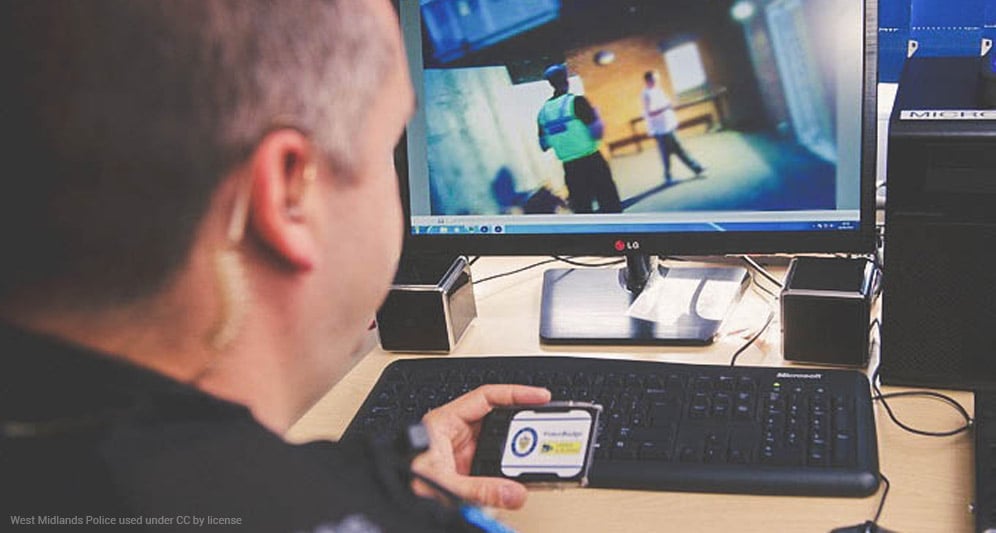
Quickly tracking and analyzing large amounts of data is important for law enforcement to do their jobs efficiently. Through cloud computing, police can access accurate statistics and real-time dashboards that monitor entire cities.
They also have the ability to connect agencies to centralize criminal justice databases and use computer-aided dispatch. This could lead to better information and decision-making.
Document and Records Management
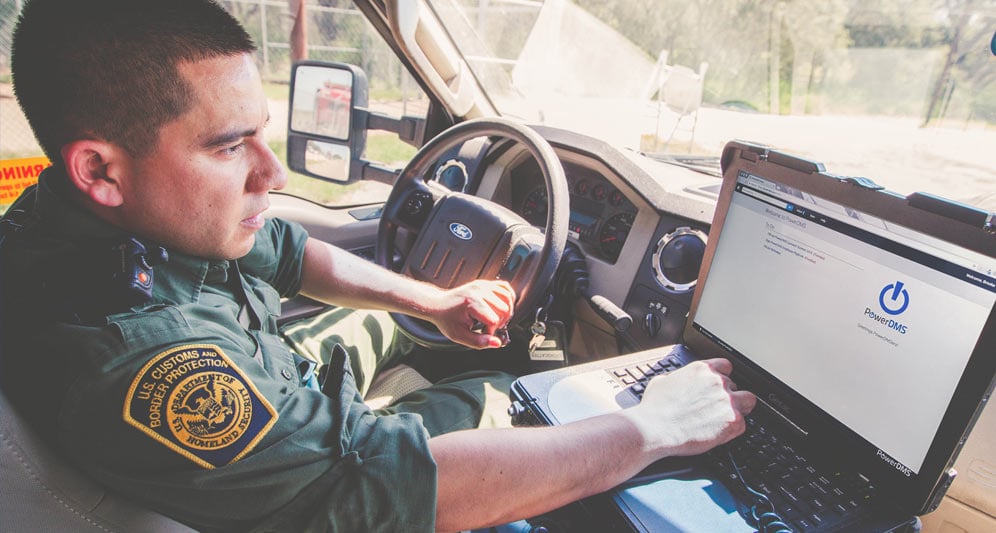
Similarly, document management software can save officers a lot of time. When you house your policies and procedures in the cloud instead of in the office, they are accessible anytime, anywhere. This means your team can pull up crucial information when it matters most.
Storing documents and records in the cloud can also save money on printing, paper, and filing supplies, so you can spend your resources on bettering your community.
Online Training
Online training is another important tool in supporting officers. Having data and other documents readily accessible is one thing. But only when your team retains that information will they be successful.
That’s why training is crucial. Online training can supplement in-person, hands-on training, allowing officers to learn conveniently and quickly. This could save a lot of money and time, allowing your officers to be on the field as much as possible.
Biometrics
Police departments have long used biometrics, primarily fingerprints for identification. But now, many are using handheld scanners and facial recognition software to improve speed and accuracy of identification.
According to the U.S. Government Accountability Office, cited in a 2026 Lexipol analysis of facial recognition in law enforcement, over two-thirds of police agencies now use facial recognition technology in some capacity, most often for facility and computer system access rather than field identification.
Public opinion on the technology is mixed and splits along demographic lines, which is why law enforcement agencies have moved forward with the technology cautiously, and why an increasing number of states now regulate or restrict its use directly.
Social Media
There’s no question that social media is a fast, easy way to connect with others. For police, it’s an opportunity to increase public safety.
Departments across the country are putting social media to work for the good of their communities. Many use it for community outreach, building bridges and developing trusting relationships with those they serve. For instance, social media is a great way to alert people about storm warnings, traffic concerns, or other emergencies. Some departments use social media for investigations, and even crime reporting.
Recently, the Morristown Police Department in Vermont turned to social media with its "Wanted Wednesdays" series, posting on Facebook to ask the public's help locating wanted individuals, sometimes offering small prizes like burgers or movie tickets for tips leading to an arrest. One post led to a woman turning herself in to police the very next day.

While many police departments have been using the above technologies for some time, some are taking advantage of newer ones. Some of the more recent technologies are still in theoretical phases, and others are for limited, case-by-case scenarios.
Predictive Analytics
Much of policing involves reacting to crime or other incidents; however, technology can allow police to be proactive.
Think of predictive analytics as an offensive approach to public safety. This technology takes crime mapping and data collection to the next level by predicting the general areas where future crimes are likely to occur. Information like this is helpful for assigning and distributing personnel, as one department found.
3D Crime-Scene Imaging
3D crime-scene imaging is quickly becoming an indispensable aspect of policing.
With this forensic technology, scanners capture a 3D model of a crime or accident scene, which allows for more precise details. Officers can use this information later on to reconstruct angles and the placement of evidence or blood splatter patterns.
Capturing the crime scene in 3D means officers only need to maintain the full scene for the duration of the scan, which is much shorter than usual. 3D imaging can also keep officers safer at crash sites, as less time investigating the scene means they can clear the collision sooner.
Personal, Through-Wall Radar
Using radar to see through buildings is another way to prevent crime before it happens. The radars work like finely tuned motion detectors, using radio waves to zero in on movements as slight as human breathing from a distance of more than 50 feet.
Your department may or may not be on the cutting edge of new technology. However, it’s helpful to know that technology always evolves. You’ll likely never be short of opportunities to implement new systems that could add safety and efficiency to your department.
How to Evaluate and Adopt New Police Technology
Knowing what's available is only the first step. Before any new public safety technology goes live, agencies need to work through a handful of practical questions.
Budget and Grant Funding
New technology, from ALPR networks to real-time crime centers to AI licensing, carries both upfront and ongoing costs. Many agencies fund these purchases through federal or state public safety grants, so it's worth checking eligibility before assuming a tool is out of reach.
Be sure to factor in not just the purchase price but also ongoing costs like data storage, software licensing, and maintenance.
Training Requirements
A tool is only as good as the officers using it. Build training into the rollout timeline, not as an afterthought once the technology arrives. This applies as much to a body camera activation policy as it does to teaching analysts how to work a real-time crime center dashboard.
Community Input
Technologies like facial recognition software, ALPR, and drones raise legitimate questions about privacy and civil liberties. Agencies that involve community members and local officials before deployment, rather than after a controversy, tend to build more durable public trust and face fewer legal challenges down the road. This kind of transparency reinforces community policing goals instead of undermining them.
Writing the Use Policy First
Every technology covered in this guide needs a written policy before it goes into the field, not after. That policy should spell out when the technology can be used, who can access the data it generates, how long that data is retained, and what oversight exists to confirm it's being used as intended. Agencies that publish clear use policies consistently avoid the legal and community backlash that follows unregulated rollouts.
Building a Technology Roadmap Your Agency Can Defend
Radios, radar, and dispatch got law enforcement this far. AI, real-time crime centers, and body-worn cameras are what's shaping the next decade, and none of it works well without a policy behind it.
The agencies that get the most out of new technology are the ones that pair every rollout with training, community buy-in, and a written use policy from day one, not the ones chasing the newest tool first and figuring out the rules later.
Everything you need to train, equip, and protect your public safety employees in a single system, from the moment they're hired until they retire, lives in one platform with PowerDMS. Schedule a consultation to learn how PowerDMS can benefit you, or explore PowerDMS's AI for Public Safety page to see how agencies are building AI governance into their technology rollout today.
Frequently Asked Questions
What technology do police officers use today?
Most agencies now run body-worn cameras, in-car computers with computer-aided dispatch, automated license plate readers, and drones. Larger departments add gunshot detection, real-time crime centers, and AI tools for report writing and evidence review. On the administrative side, cloud-based policy management and online training keep officers current on procedures from any device.
How is AI used in law enforcement?
Agencies use AI to draft incident reports from body camera footage, redact video for records requests, transcribe interviews, translate in the field, and analyze crime patterns. Every credible deployment keeps a human in the loop: officers review and approve anything AI produces. Departments adopting these tools need clear written policies before the first license is purchased.
What is a real-time crime center?
A real-time crime center is a centralized hub where analysts monitor live feeds from public cameras, license plate readers, gunshot detection sensors, and dispatch systems, then push relevant intelligence to officers responding to calls. Hundreds of U.S. agencies now operate one, and smaller departments increasingly access shared regional centers rather than building their own.
What are the privacy concerns with police technology?
The biggest concerns center on facial recognition accuracy, license plate data retention, drone surveillance, and how long agencies keep footage. Several states now regulate or restrict these tools directly. Agencies that publish clear use policies, set retention limits, and document oversight build community trust and avoid the legal challenges that follow unregulated deployment.